
“Be calm like a capybara—chill, friendly, and always ready to share the pool with everyone!”
Step by Step Drawing Tutorial of a Cute Capybara for Kids
Learn how to draw a cute capybara with this super easy step-by-step tutorial made for kids, beginners, and young animal lovers! With its round face, chubby cheeks, and chill personality, this adorable cartoon capybara is perfect for classroom art, homeschool activities, and fun doodling sessions. Use simple shapes and clear steps to bring the world’s most relaxed rodent to life!
Don’t forget to prepare your materials. Please see my post on how to use the Grid Line Method here. By the way we have prepared a free downloadable Grid Lined Paper that you can use, click the link to download a copy. Please note that these free downloads are intended for personal use only.💖
You may print it on an A4 sized paper or if you want to draw on a smaller scale, you may print 2 copies on one A4 sized paper.
Let’s Draw a Capybara!
Step 1: First, draw the left side of the head of the capybara. Make the lower part bigger than the top to reflect the distinctive shape of its head. Take care to include a slight curve to emphasize the roundness of the chin, which adds character to the face.

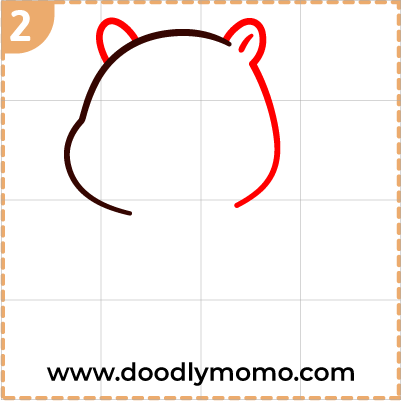
Step 2: Next, draw the right side of the head of the capybara, ensuring to capture the distinctive shape and features that make this animal unique. Carefully sketch both ears, making sure they are proportionate to the head and slightly rounded at the tips. Don’t forget to add small curves for ear detail, which will enhance the realism of your drawing and give the ears a more textured appearance. As you work on this part, pay attention to the placement and angle, contributing to the overall personality and expression of your capybara.
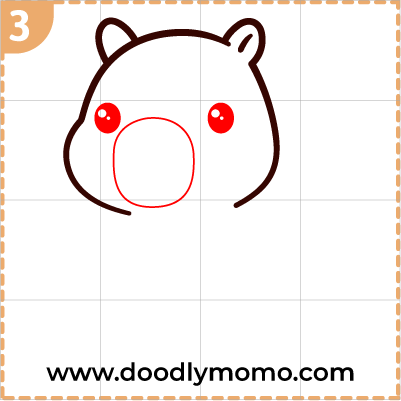
Step 3: Draw two circles for the eyes, taking care to make them proportionate to the rest of the face. Ensure that the spacing between the eyes is balanced, as this can greatly affect the overall symmetry of your drawing. Don’t forget to add a small circle inside each eye for additional glares, as this detail will bring life and personality to your drawing, making the eyes seem more expressive and vibrant. Next, draw the blunt muzzle of the capybara using thin lines for guidance, starting just below the eyes and extending outwards. Pay attention to the shape of the muzzle, ensuring it captures the essence of the capybara’s gentle and friendly demeanor.
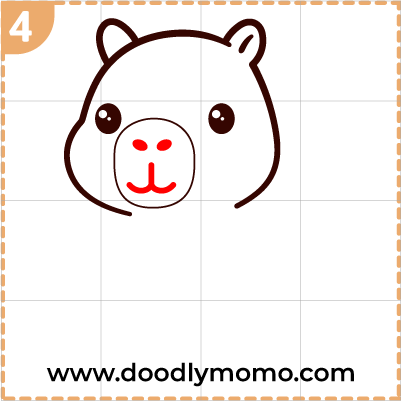
Step 4: Draw two ovals for the nose, ensuring they are proportionate to the face you have created. Next, add some details within the ovals to give the nose a more three-dimensional appearance. Then, draw a curved line that connects both sides of the face to form a smiling mouth; make sure to curve the line upwards at each end for a cheerful expression. You might want to add a small dip in the center of the mouth to give it a more natural look.
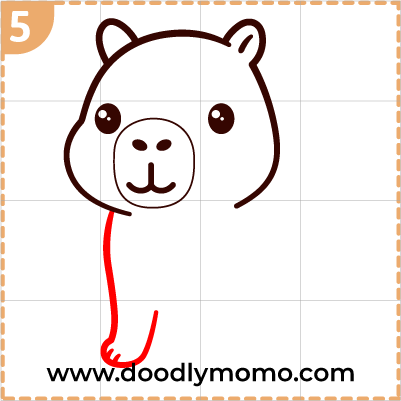
Step 5: From the chin, draw one of the front legs of the capybara, ensuring to maintain a natural position that reflects its relaxed demeanor. As you sketch, pay attention to the proportions, making the leg slightly thicker at the base and tapering it toward the toes. Don’t forget to add small curves for toe details.
Step 6: Draw a small curve for the tummy of the capybara, ensuring that it’s rounded and gives the appearance of softness, which is characteristic of this adorable animal. As you complete this curve, pay attention to the proportions to maintain balance in your drawing. Next, draw the second front leg too, making sure to position it slightly forward to create a sense of depth and realism. This leg should mirror the first one in size and shape, capturing the unique stance of the capybara as it relaxes in its natural habitat.
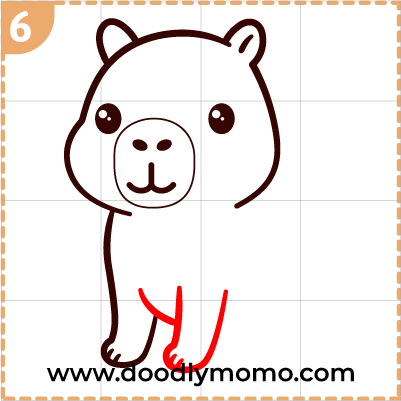
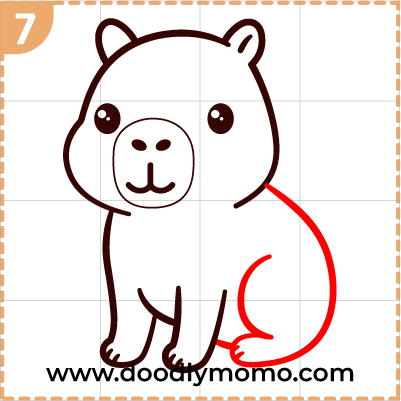
Step 7: Lastly, a big curve for the back of the capybara is essential to give it a natural and realistic look. This curve should flow smoothly from the top of the animal’s back down towards its hindquarters, showcasing its robust and rounded body shape. After establishing this curve, draw one of the back legs, ensuring that it has a solid stance that suggests weight and stability. Now that you’ve finished your adorable capybara drawing, curl up with our step-by-step British Shorthair drawing tutorial and learn to draw this calm and cuddly cat!
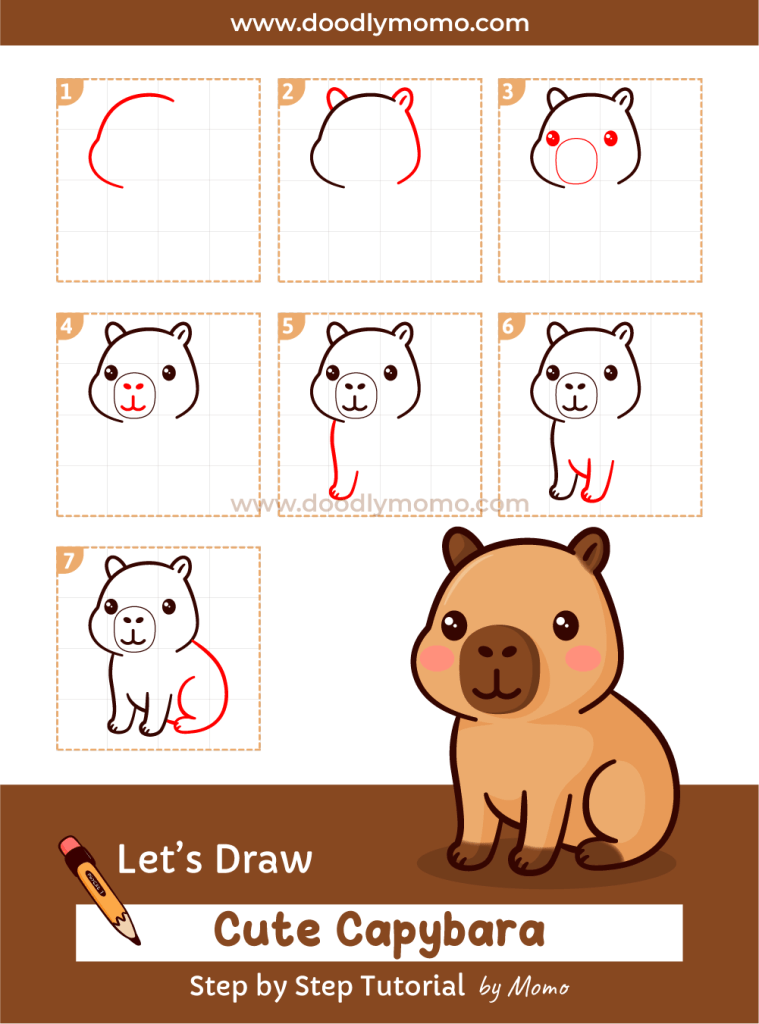
Here are all the detailed steps for your easy reference, ensuring that you can follow along without any confusion as you work through the process. Each step is meticulously outlined to provide clarity, allowing you to navigate through the procedure with ease and confidence. By following this structured approach, you will minimize the chances of making mistakes and increase your efficiency as you progress. Feel free to refer back to this guide whenever you need a reminder or a clearer understanding of the process.
Did you know?
Capybaras are the world’s largest rodents—and also some of the friendliest? These gentle animals love to relax in the water and hang out in big groups. Capybaras are excellent swimmers and even have webbed feet to help them glide through rivers and ponds with ease! They can snooze underwater with just their noses poking out like little periscopes. Capybaras are so calm and peaceful that other animals—even birds—often sit on their backs. It’s like they’re the chill superstars of the animal kingdom!

Here’s some more kid-friendly information:
- Capybaras are the largest rodents in the world—even bigger than beavers!
- They love water and are excellent swimmers thanks to their webbed feet.
- Capybaras can hold their breath for up to five minutes underwater!
- They live in groups, sometimes with 10 to 20 friends or more.
- Capybaras have big front teeth that never stop growing—perfect for nibbling grass.
- They’re super chill—so calm that birds and monkeys often sit on their backs.
- Capybaras “talk” to each other with squeaks, purrs, and whistles.
- They take mud baths to cool off and protect their skin from the sun.
- Capybaras are herbivores, which means they only eat plants, grass, and fruit.
- They’re most active in the morning and evening, so they love lounging during the day!
Did you know? Capybaras are the world’s largest rodents and love to relax in warm water with their friends! For another fluffy favorite, check out our step-by-step Red Panda drawing tutorial next!
📌We are in Pinterest too! Check us out and save our pins as reference! ♥
You can also check and buy vector files and images from our Adobe Stock link below, where you’ll find a diverse collection catering to all your creative needs, ensuring that you have quality visuals for any project, whether it be for web design, marketing, or personal use.
Thank you for reading! We hope you found this article insightful and enjoyable. Please have a look at our other step-by-step tutorials, where you can discover a variety of adorable dog breeds, including tips on training, grooming, and care. Whether you’re a seasoned dog owner or considering bringing a new furry friend into your home, our comprehensive guides are designed to help you along the way. Happy Drawing!


 Doodlymomo

Leave a comment