“I’m basically a flying energy drink with feathers. Blink and I’ve already judged your flowers.” 🐦
Step By Step Tutorial
This tutorial instructs readers on how to draw a charming Hummingbirds, capturing its playful personality while emphasizing care needs. It lists steps for drawing features, shares interesting facts about Hummingbirds, and includes resources like grid-lined paper for aiding drawing. Essential for bird enthusiasts and art lovers alike. 🐦
Don’t forget to prepare your materials. Please see my post on how to use the Grid Line Method here. By the way we have prepared a free downloadable Grid Lined Paper that you can use, click the link to download a copy. Please note that these free downloads are intended for personal use only.💖
You may print it on an A4 sized paper or if you want to draw on a smaller scale, you may print 2 copies on one A4 sized paper.
Let’s Draw!
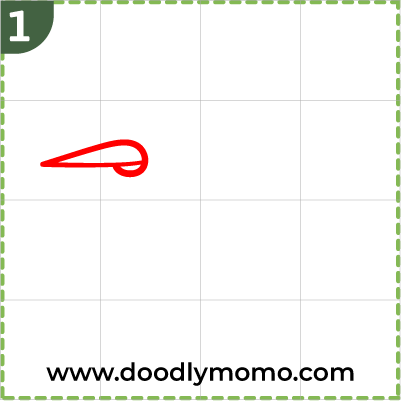
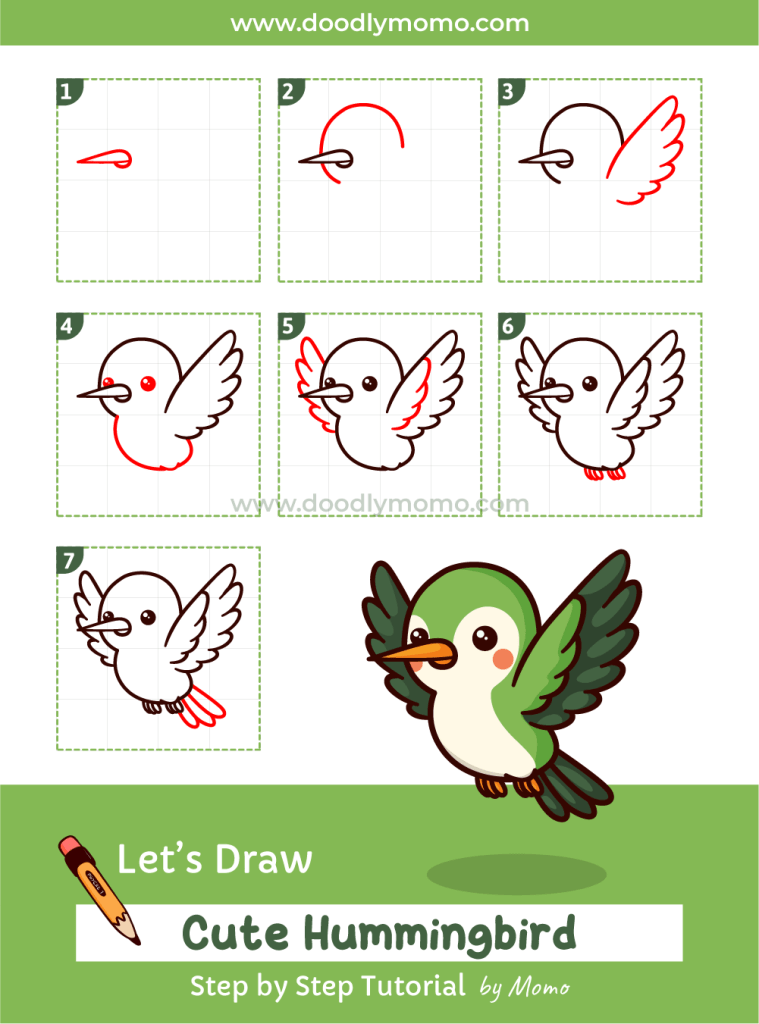
Step 1: Start by drawing a pointy line for the beak that tapers to a sharp point. Add a small curve on the bottom to shape the beak naturally. This curve helps connect the beak to the bird’s face, adding character to your drawing. Adjust the angle of the beak slightly based on the direction you want your bird to face, as this influences its posture and appearance.
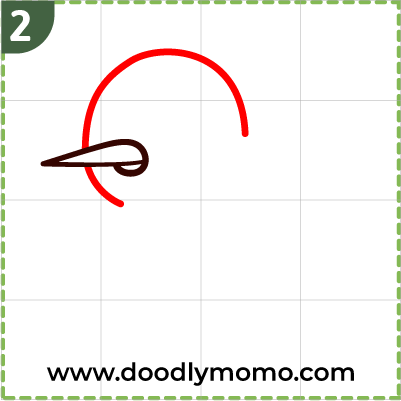
Step 2: Next, draw a big curve for the top of the head, ensuring it has a gentle arc that captures the shape of a rounded dome. After that, create another curve for the left part of the head, making it slightly more pronounced to emphasize the contours of the face. This step is crucial as it establishes the overall head structure, allowing you to visualize how the facial features will align below these curves.
Step 3: On the right side of the body, draw a beautifully curved wing reaching upward, showcasing its grace and elegance. The wing should have six carefully crafted “feather bumps” to give it a cute, fluffy look, as if it’s gently waving in the breeze. Each bump can vary slightly in size to add a playful touch, making the wing appear more dynamic and lively.

Step 4: Inside the head, draw a small round eye with a tiny white highlight to make it sparkle and bring your creation to life. This detail enhances the expression and draws attention to your character’s gaze. Extend a round shape from the head to form a soft oval body, slightly larger at the bottom, creating balance and stability. This shape suggests a friendly demeanor, adding charm to your illustration. As you refine it, consider adding subtle curves for softness and warmth.

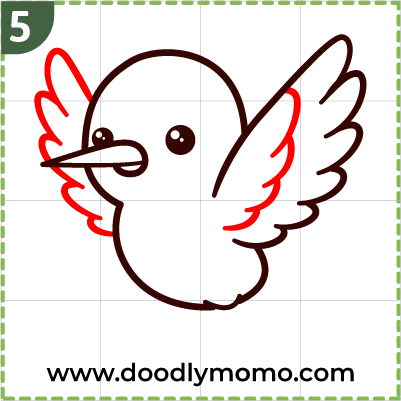
Step 5: On the left side of the body, draw another curved wing reaching upward, ensuring that the curve flows gracefully to capture the essence of lightness. This wing should feature five distinct “feather bumps” to give it a cute, fluffy look, enhancing the overall charm of your drawing. Each bump can vary slightly in size to add a playful quality. On the right side, draw another wing that mirrors the first but include four additional “feather bumps” for extra wing details, as this contrast will create a balanced composition. Feel free to add some gentle shading around the bumps to emphasize their softness and make your creation even more lively.
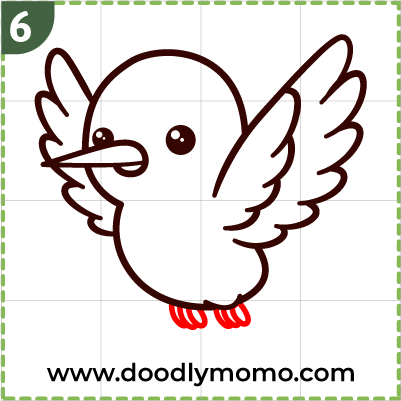
Step 6: Underneath the body, draw two tiny feet that are well-proportioned for a cute look. Use short curved lines or small “W” shapes for the toes to add detail. You can include small arches to show the soles of the feet, making them look more realistic. Be sure to position the feet close to the body for stability and a better design.
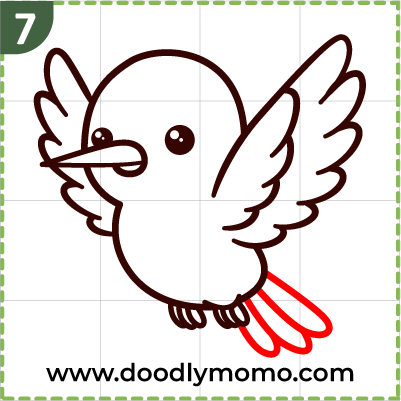
Step 7: At the bottom of the bird, draw three long, curved feathers fanning out like flower petals. These feathers should be narrow at the top and wider at the end, giving them a graceful look. As you draw, think about how they might sway in the breeze, which adds movement to your artwork. Varying the curve of each feather can make them look more lively and natural. This will improve the overall interest and realism of your bird, making it seem ready to fly. Remember to add some light shading or small lines within the feathers for texture, to bring your drawing to life. Great job!
Here are all the detailed steps for your easy reference, ensuring that you can follow along without any confusion as you work through the process. Each step is meticulously outlined to provide clarity, allowing you to navigate through the procedure with ease and confidence. By following this structured approach, you will minimize the chances of making mistakes and increase your efficiency as you progress. Feel free to refer back to this guide whenever you need a reminder or a clearer understanding of the process.
Did you know?
Hummingbirds are some of the tiniest birds in the world, but they have superpowers! They flap their wings so fast—up to 80 times per second—that it makes a buzzing or humming sound, just like their name. These little speedsters can fly backward, upside down, and even hover like a helicopter while sipping sweet nectar from flowers with their long, straw-like tongues. Even though they’re small, hummingbirds are full of energy and visit hundreds of flowers every single day!
Here’s some more kid-friendly information:
- Hummingbirds are the smallest birds in the world—some are as tiny as a spoonful of sugar!
- Their wings flap super fast—up to 80 times per second! That’s why they make a humming sound when they fly.
- They can fly backwards, sideways, and even hover in place, like a tiny flying helicopter!
- Hummingbirds love flowers, especially bright red ones, because they drink sweet nectar from them.
- They have super long tongues that roll up like straws to sip nectar deep inside flowers.
- Their hearts beat incredibly fast—over 1,000 times per minute when flying!
- They visit hundreds of flowers a day to keep their energy up—these little birds are always hungry!
- Hummingbirds can remember every flower they visit, even after a long migration.
- They build tiny nests the size of a ping-pong ball, using soft materials like spider silk and plant fluff.
- Despite their size, hummingbirds are brave and can chase away bigger birds from their favorite flowers!
📌We are in Pinterest too! Check us out and save our pins as reference! ♥
You can also check and buy vector files and images from our Adobe Stock link below, where you’ll find a diverse collection catering to all your creative needs, ensuring that you have quality visuals for any project, whether it be for web design, marketing, or personal use.
Thank you for reading! We hope you found this article insightful and enjoyable. Please have a look at our other step-by-step tutorials, where you can discover a variety of adorable dog breeds, including tips on training, grooming, and care. Whether you’re a seasoned dog owner or considering bringing a new furry friend into your home, our comprehensive guides are designed to help you along the way. Happy Drawing!


 Doodlymomo

Leave a comment